McKinsey research found that 70% of change programs fail to achieve their goals, largely due to employee resistance and a lack of management support, according to their 2015 research on organizational transformation. Communication isn't the only factor in that failure rate, but it's almost always tangled up in it. Employees who don't understand why a change is happening, or what it means for their daily work, tend to resist it.
This post breaks down what a change management communication plan actually is, the components that make one effective, how to build one step-by-step, and who should be delivering the message.
Key Takeaways
- A change communication plan is an ongoing process, not a single kickoff announcement
- Pairing leadership messaging with two-way feedback reduces resistance and builds trust
- Strong plans define objectives, audience-specific messages, channels, cadence, and measurement
- Senior leaders and frontline managers carry distinct but equally critical messages
What Is a Change Management Communication Plan?
A change management communication plan is the structured strategy that outlines how an organization will inform, engage, and support people through a specific change. It covers what's changing, why it's happening, who's affected, and how feedback will be collected along the way.
That last piece matters. Change communication isn't a memo. It's a continuous process of building awareness, understanding, and support, stretched across weeks or months, not compressed into a single email blast.
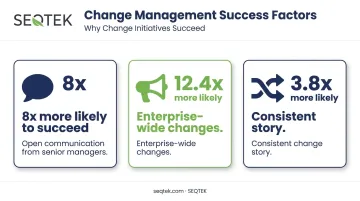
The data backs up why this matters. McKinsey's global survey of nearly 2,000 executives found a clear link between communication and transformation success:
- Organizations where senior managers communicated openly about transformation progress were 8 times more likely to report success
- For enterprise-wide changes specifically, that likelihood jumped to 12.4 times more likely
- Using a consistent change story throughout the effort was linked to a 3.8 times greater likelihood of success
Formal change communication plans used to be a nice-to-have. Now they're closer to a requirement. Faster technology adoption cycles, an active M&A market, and operational shifts across industries like oil & gas, healthcare, manufacturing, and financial services all play a role. Organizations are managing more concurrent changes than ever, often with less runway between them.
Change Communication vs. Everyday Internal Communication
Routine internal updates announce things. Change communication has to answer a harder question: "What does this mean for me?"
Everyday communication might tell employees a new tool is launching next month. Change communication tells them why the tool exists, what happens if adoption doesn't happen, what their role looks like afterward, and how to get help if they're stuck. It's built to drive specific, often measurable, behavior change, not just awareness.
Key Components of an Effective Change Management Communication Plan
Every solid plan rests on a few non-negotiable building blocks:
- Objectives tied to business goals — Define what success actually looks like for this specific initiative, not generic "buy-in"
- Stakeholder and audience segmentation — Customize messages by role, level of impact, and current mindset toward the change
- Core and audience-specific messages — Cover both the business "why" and the personal "what's in it for me and what do I need to do"
Getting the message sequence right matters as much as the content itself. Prosci's guidance is clear: initial communication should establish the business case and the risk of not changing before shifting to personal-impact messaging, per their communications checklist for change management.
Lead with the wrong piece, and employees tune out before they hear what actually affects them.
The P's of Change Communication
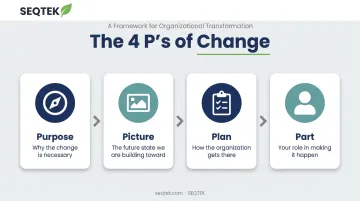
The most widely referenced framework in change communication is the 4 P's, rooted in William Bridges' transition-management work:
- Purpose — Why the change is necessary
- Picture — What the future state will look like
- Plan — How the organization will get there
- Part — The role each person plays in making it happen
Some practitioners add a fifth: Practice, meaning the new routines and behaviors people need to adopt once the change is live. Versions of this framework vary by source, so treat the fifth P as a practical add-on rather than a fixed standard.
Applied well, the P's shape everything from a CEO's kickoff message (Purpose and Picture) to a manager's one-on-one conversation about what changes in someone's actual job (Part and Practice).
Channels, Cadence, and Feedback Loops
A plan without a delivery mechanism is just a document. Effective plans map specific channels and timing to key milestones, building a rolling calendar that spans leader briefings, intranet updates, team huddles, and video messages.
Equally important: two-way feedback. Pulse surveys, live Q&A sessions, and open suggestion channels give employees a place to voice concerns instead of venting them in the break room.
Prosci recommends repeating key messages five to seven times across multiple channels so the message actually sticks, paired with a regular cadence for measuring sentiment and engagement over time.
How to Build a Change Management Communication Plan: Step-by-Step
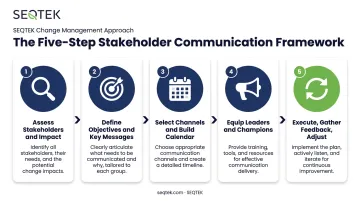
Step 1: Assess Stakeholders, Impact, and Communication Needs
Start with a stakeholder analysis. Identify who's affected, how much, and what concerns, channels, and mindsets you're planning around. This step should surface pockets of resistance early, before they turn into rumors. SEQTEK's Case Study Workshops build this in directly, mapping and qualifying affected parties as a structured deliverable rather than an afterthought.
Step 2: Define Objectives, Vision, and Key Messages
Document the case for change and the future-state vision. Then craft messages that connect the business rationale to personal impact for each audience segment you identified in Step 1.
Step 3: Select Channels and Build an Editorial Calendar
Map multichannel touchpoints, leader briefings, intranet posts, team huddles, and video updates, to key milestones in a rolling communication calendar. This keeps messaging consistent instead of reactive.
Step 4: Equip Leaders and Change Champions to Deliver the Message
Give managers and peer influencers toolkits, training, and talking points so they can reinforce the message credibly. This is where a lot of internal plans stall out; leaders know what to say but not how to say it in a way that lands.
Partnering with an experienced change management consultancy like SEQTEK helps organizations build this leadership readiness. It also provides access to specialized talent that accelerates adoption without pulling internal teams away from day-to-day operations.
Step 5: Execute, Gather Feedback, and Continuously Adjust
Launch the plan, then monitor sentiment through pulse surveys and feedback channels. Refine messaging, timing, or cadence based on what you're actually hearing, not what you assumed people would think.
Who Should Lead and Deliver Change Communications
Getting the content right doesn't help if the wrong person delivers it. Employees expect senior leaders to own the strategic business case, the "why" behind the change and how it connects to company goals. They expect their direct managers to handle personal-impact messages.
Reverse those roles, and credibility takes a hit. A CEO explaining how a new system affects someone's daily workflow feels disconnected, while a frontline manager trying to justify the entire business strategy feels out of their depth.
Prosci's research confirms this: 58% of employees prefer to receive personal-impact communications from their direct supervisor, not executives or project teams, according to Prosci's Best Practices in Change Management research.
On format: favor live, face-to-face channels for high-impact updates.
- Town halls for organization-wide announcements
- Team huddles for department-level detail
- Manager one-on-ones for personal impact
- Digital channels (intranet, email) as reinforcement, not the primary vehicle
Change champions and peer influencers fill a different gap. They carry messages informally, answer the questions people are too hesitant to ask in a town hall, and surface frontline concerns back up the chain.
This is where SEQTEK's Localshoring model adds value: embedding change management consultants directly within client teams to identify and support these informal networks. When the person delivering the message understands the culture and daily reality of the team, it tends to land.
Common Change Communication Mistakes to Avoid
Even well-intentioned plans go sideways. Watch for these:
- Treating it as a one-time announcement. People move through change at different speeds, so a single kickoff email won't reach someone still in denial three weeks later.
- Leaving communications teams out of early planning. This produces rushed, inconsistent messaging that erodes trust fast.
- Ignoring feedback channels. When there's nowhere to ask questions, rumors fill the gap. According to McKinsey's transformation research, 49% of executives say they'd spend more time communicating the change story if they could start their transformation over.
Frequently Asked Questions
What is change communication?
Change communication is the ongoing process of building awareness, understanding, and support for organizational change among the people affected by it. It runs continuously throughout a project, well beyond any single memo or kickoff event.
Who should send change communications?
Senior leaders should communicate the strategic "why" behind a change. Direct managers should deliver the personal-impact messages to their own teams. Reversing these roles tends to hurt credibility on both sides.
How should I contact people during change communications?
Prioritize live, face-to-face formats like town halls, huddles, and manager one-on-ones for high-impact updates. Use digital channels like email or the intranet to reinforce, not replace, those conversations.
What are the P's of change communication?
The core framework includes Purpose, Picture, Plan, and Part, rooted in William Bridges' transition model. Some practitioners add a fifth, Practice, though versions vary slightly depending on the source.
How long should a change management communication plan run?
Well past launch day. Effective plans continue through the reinforcement and adoption phases until the new behaviors become routine, which often means months, not weeks.
What's the difference between a change management plan and a change communication plan?
A change management plan covers the full strategy, including process, training, and resourcing. The communication plan is one piece of that broader plan, focused specifically on messaging, channels, and feedback.